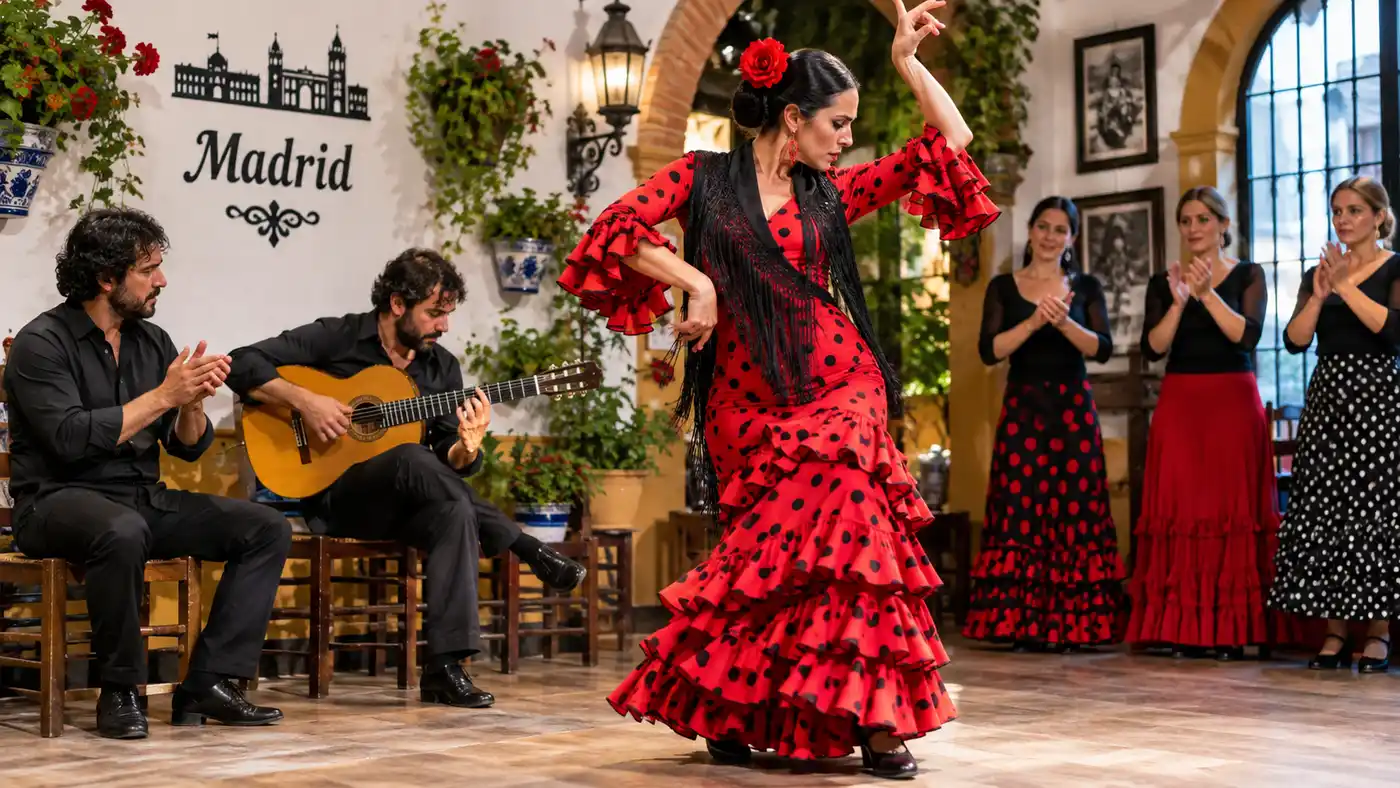
Madrid Flamenco Dance Classes and Workshops
You can spend nights in dimly lit caves sipping lukewarm sangria while someone else stamps their heels, but nothing compares to the percussion going through your own spine. Madrid is not just a stage for spectators. The capital acts as the great clearinghouse for dancers from Seville, Jerez, and Granada who come here to find work, which means the studios are packed with working artists. If you want to aprender flamenco madrid offers an intoxicating, slightly intimidating gateway, whether you are trying to pick up basic foot rhythms or spending three weeks unlearning everything your ballet teacher told you.
Walking into a rehearsal studio here smells of cedar shavings, damp cotton, and cheap black espresso. You do not need to be a prodigy to take a class. Plenty of neighborhood schools cater to curious visitors who just want to figure out why a twelve-beat cycle makes people shout in ecstasy. From single afternoon workshops to rigorous conservatories, the options can swallow you whole if you do not know where to look.
Book your flamenco show madrid experience:
Why Amor de Dios is the Temple to Aprender Flamenco Madrid
Go to the Antón Martín market in Lavapiés. Walk past the fishmongers scraping scales off sea bass, head up the stairs to the second floor, and you will find Amor de Dios. The floorboards have taken a beating since the 1950s. This place is legendary for good reason. Antonio Gades rehearsed here. Generations of artists have left heel marks in the pine floors, and the walls are plastered with yellowing black-and-white photos of dancers who could break your heart with a flick of their wrist. It operates as a cooperative rather than a standard commercial school, which confuses a lot of first-timers.
You do not pay an administrative desk for a generic pass. Instead, you walk down the scuffed hallway, read the flyers taped to studio doors, and pay the individual maestro directly in cash. Classes run from morning until night across several studios. One room might host a world-touring soloist refining a bulería, while the room next door has six beginners trying desperately to separate their hip movement from their shoulders. The atmosphere can feel blunt. Teachers rarely coddle you, but their corrections are pure gold if you leave your ego in the hallway.
Pro tip: Arrive 20 minutes before class with exact change in euros. Introduce yourself quietly to the maestro at the studio door before putting your shoes on, as many instructors lock the doors the second class starts.
If you have no dance background at all, jumping straight into a high-level drop-in class at Amor de Dios will make your head spin. Seek out teachers like María Juncal or Alfonso Losa when they offer initiation levels. The space functions as an informal institute of flamenco madrid style, where community and grit replace polished corporate gym vibes. It smells of hard work, and nobody cares what outfit you are wearing as long as you pay attention to the compás.
Drop-in Studios and the Beginner Flamenco Workshop Madrid Scene
Maybe you only have three days in the city and want a casual taster without committing to a full curriculum. Several independent dance studios scattered through Centro and Chamberí run approachable workshops designed for travelers and curious locals. A good single-session clase flamenco madrid experience should demystify the posture, show you the basic zapateado, and teach you how to clap palmas without looking like you are swatting flies at a picnic.
Centro de Danza Flamenca El Lucero, located down near Atocha, has built a sterling reputation for organized, accessible learning. Unlike the chaotic charm of older studios, El Lucero has an organized reception desk, bright changing rooms, and structured intro classes. They understand how foreign students learn. You will not feel stranded here if your Spanish is rusty, though almost all flamenco terminology stays in Spanish anyway. A standard 90-minute flamenco workshop madrid session here will walk you through braceo (arm styling), basic marcajes, and the difference between dry clapping and hollow clapping.
- Footwear basics: Wear sturdy shoes with a thick, low, block heel. Never wear stilettos, running sneakers with rubber grips, or sandals.
- Upper body clothing: Choose breathable cotton shirts that allow complete shoulder mobility. Flamenco requires held, lifted elbows that will exhaust your back muscles fast.
- Lower body options: You do not need a flared skirt right away. Simple stretchy leggings or relaxed trousers work fine so the instructor can monitor your knee alignment.
- Hydration rule: Pack a 1-liter water bottle because studio spaces inside older brick buildings tend to trap heat quickly.
Another welcoming space is the Centro Cultural Flamenco Madrid near Chueca. They occasionally hold intimate weekend workshops focused on appreciation alongside movement. If you are browsing travel forums in French, you will often spot travelers looking for a cours flamenco madrid; this center is usually one of the first places recommended because of their clean pacing and patient teachers.
Choosing the Right Clase Flamenco Madrid: Styles and Studios Compared
Picking where to spend your energy depends on your timeline, budget, and pain tolerance. Some studios prioritize rigorous theatrical technique, while others focus on the raw, improvised style seen in southern peñas. The table below outlines what you can expect from the major institutions around the city.
| Studio / School | Neighborhood | Best For | Approx. Cost | Drop-In Friendly? |
|---|---|---|---|---|
| Amor de Dios | Lavapiés / Antón Martín | Intermediate dancers, professionals, tradition | €18 to €25 per class | Yes, pay instructor directly |
| El Lucero | Atocha / Delicias | Beginners, travelers, structured syllabi | €22 to €30 per workshop | Yes, booking online suggested |
| Estudio Flamenco Carmen Senovilla | Retiro / Pacífico | Footwork mechanics, serious technique | €75 to €110 per month | Rarely, prefers monthly terms |
| Centro Superior de Danza (CSDMA) | Moncloa / Ciudad Universitaria | Academic degrees, professional conservatory level | €1,200+ per term | No, formal entrance auditions |
For those aiming beyond hobby sessions, Madrid houses institutional training centers like the conservatorio flamenco madrid networks. The Conservatorio Profesional de Danza Carmen Amaya offers multi-year curriculums covering classical Spanish dance, escuela bolera, and authentic danza flamenca madrid traditions. These programs are intense. Students spend six hours a day drilling castanets, foot percussion, and contemporary stage presence, preparing for international theater companies.
Book your flamenco show madrid experience:
Planning an Intensivo Flamenco Madrid: Deep Dives for Dedicated Dancers
If you have a week or two of holiday time, an intensivo flamenco madrid course is the absolute fastest way to transform your dancing. Summer intensives run through July and August across several academies. Amor de Dios fills to the brim with international students who fly in from Tokyo, Paris, and Mexico City just to study under master dancers.
These intensives typically run for five consecutive days. You spend two hours every morning on footwork and technique, followed by two hours of choreography in a specific palo, like soleá por bulerías or alegrías. By Wednesday, your calves will feel like solid concrete. By Friday, the strange polyrhythmic pulse starts to settle into your bones in a way that weekly classes back home just cannot replicate.
Note: Most studios have wooden sprung floors, but nail-tipped shoes are mandatory for advanced footwork classes. If you do not own real shoes, buy them before your intensive starts rather than attempting footwork drills in street boots.
If you need gear, Madrid is the global capital for dance attire. Before your workshop, take a detour to browse flamenco shops and fashion in Madrid for custom leather shoes with hand-driven nails in the heel and toe. Walking into shops like Senovilla or Gallardo feels like entering an artisanal cobbler shop. They measure your arch, calculate your foot width, and let you choose between suede and box-calf leather. Proper shoes protect your joints from the repetitive shock of stamping on hardwoods.
A good intensive also forces you to listen differently. In a standard class, teachers play recordings through a phone. In an intensive at an authentic centro flamenco madrid, you will often have a live guitarist and a cantaor (singer) in the room on Thursday and Friday. Dancing to a living voice that stretches and shortens beats based on the singer's lung capacity will terrify you at first. Then it will thrill you.
Understanding the Basics: What to Expect When You Bailar Flamenco Madrid
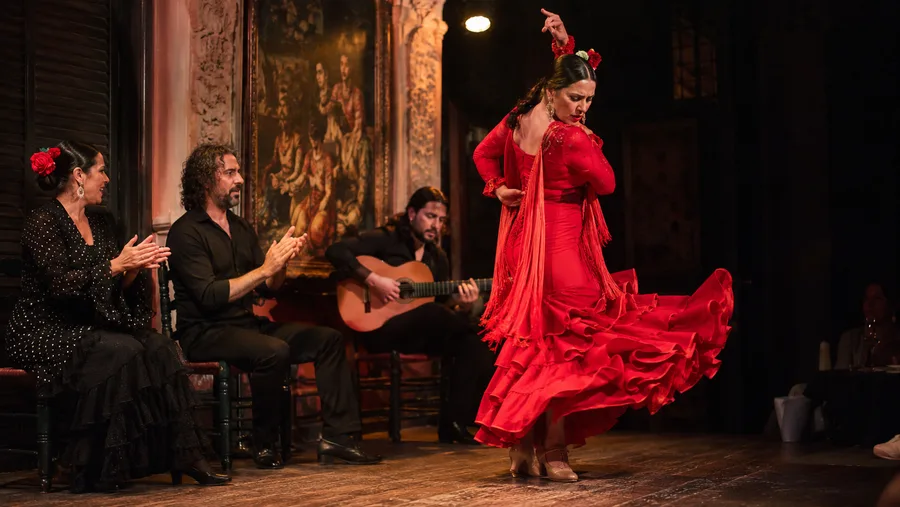
A lot of students arrive thinking flamenco is mostly dramatic arm sweeping and sour facial expressions. Honestly, the arm sweeps are the easiest part. The real challenge lives in your gut and your feet. When you start to bailar flamenco madrid instructors will strip away your desire to be pretty and demand that you be grounded instead.
- The Compás: The rhythmic meter. Forget Western four-four pop counts; much of flamenco moves in twelve-count cycles with irregular accents on beats 3, 6, 8, 10, and 12.
- The Posture: Your spine stays pulled tall while your knees remain slightly softened. This lowers your center of gravity so you can strike the floor with power without rattling your teeth.
- Zapateado (Footwork): Broken down into striking with the flat sole (golpe), the ball of the foot (planta), and the heel (tacón). Combining these creates fast acoustic patterns.
- Braceo: Fluid arm rotations initiated from the wrists and elbows, designed to contrast with the sharp, percussive sounds happening below your waist.
I think the most humiliating part for most newcomers is the palmas. You assume clapping is simple until an instructor asks you to clap an off-beat counter-rhythm while singing along and watching someone else dance. Your hands will turn red and tingle. After half an hour, your brain will feel delightfully fried. It is mathematical, emotional, and physical all at the same time.
To ground your studio practice in real-life context, step outside the rehearsal halls and spend your evenings hunting down authentic and non-touristy flamenco in Madrid. Seeing dancers react spontaneously inside tight, smoky peñas shows you how the studio exercises get used in real conversations between guitar, voice, and footwork. You realize that a marcaje is not just a dance step. It is a breathing room between stories.
Frequently Asked Questions about aprender flamenco madrid
Can I take a flamenco class in Madrid if I speak no Spanish?
Yes. Many instructors at larger studios like El Lucero speak conversational English, and physical dance instruction relies heavily on visual demonstration and auditory rhythm. Learning basic words like golpe, planta, tacón, and compás before your first session will make things much smoother.
Do I need to buy professional flamenco shoes for a beginner workshop?
No, you do not need expensive specialized shoes for a one-off class. A comfortable leather dress shoe or ankle boot with a wide, stable 1.5 to 2-inch heel will work fine. Avoid sneakers, platform shoes, running shoes, or anything with rubber soles that grab the floor.
How much does a casual flamenco class cost in Madrid?
Single drop-in classes at community hubs like Amor de Dios generally cost between €15 and €25. Private one-on-one lessons usually start around €45 to €75 per hour, while structured introductory workshops aimed at travelers run between €25 and €40 per session.
What is the difference between danza flamenco madrid studios and normal dance academies?
Standard dance studios often teach flamenco as part of a broad theatrical syllabus alongside classical ballet and contemporary jazz. Dedicated flamenco centers focus strictly on the palos, live musical accompaniment, traditional cante coordination, and percussive mechanics.
Quick Reference
- Amor de Dios: Cash payment directly to teachers, historic venue
- El Lucero: Best organized drop-in schedule for newcomers
- Required footwear: Low block leather heel, smooth hard sole
- Class pricing: €15 to €35 for typical open group workshops
- Key hub: Antón Martín neighborhood, Calle de Santa Isabel 5
Book your flamenco show madrid experience:
My Take: Stepping Onto the Hardwood
Taking a dance class in Madrid is humbling, sweaty, and completely addictive. You will likely spend your first hour wondering how someone's feet can move like a snare drum while their ribcage stays perfectly still. That disorientation is part of the process. Madrid does not dilute its cultural traditions to flatter tourists, and the teachers expect your full attention once you step over the studio threshold. Lace up some solid shoes, find a studio near Lavapiés, let your shoulders drop, and listen to the floor speak back to you.
Read more about flamenco show madrid.