Authentic and Non-Touristy Flamenco in Madrid
Madrid has a strange relationship with flamenco. Purists will tell you that the art form belongs entirely to Andalusia, born in the dusty yards of Jerez, Seville, and Cadiz. They are half right. The roots live south, but for more than a century, every singer, guitarist, and dancer who wanted to turn raw talent into a serious career had to take a train north. Madrid became the marketplace, the crucible, and the battleground where reputations were cemented. If you want to witness authentic flamenco in madrid, you are not chasing a museum piece. You are stepping into a living, restless ecosystem that draws the fiercest performers in Spain every single night of the week.
The problem is the sheer amount of garbage standing between you and the real thing. Walk down Calle de las Huertas around eight in the evening and you will have laminated flyers waved in your face, promising sangria pitchers, pre-cooked paella, and an "authentic Spanish experience" for forty euros. Avoid those rooms. Real flamenco does not need cheap alcohol or theatrical frills to punch you in the chest. Finding the best non touristy flamenco in madrid requires looking past the glossy storefronts and understanding where working artists actually gather to test each other.
Book your flamenco show madrid experience:
What Separates Real Flamenco from a Tourist Trap?
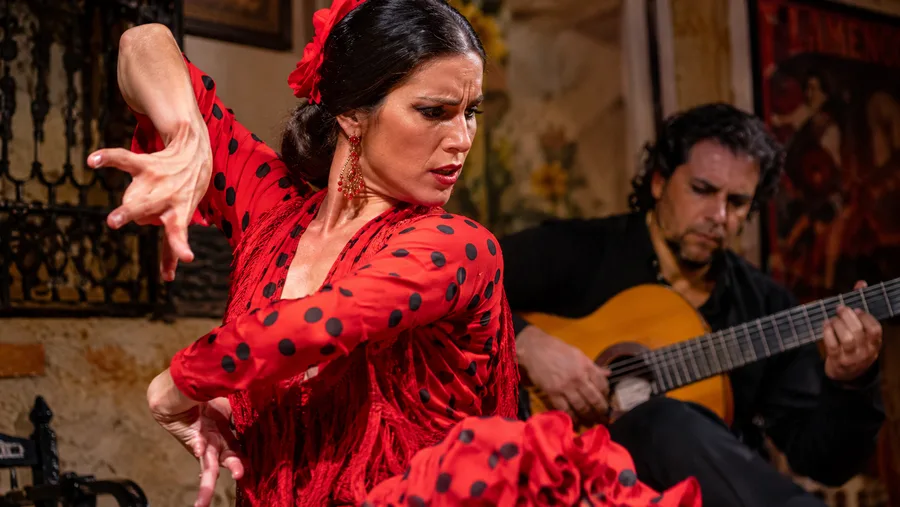
Commercial tablaos design their sets around short attention spans. The dancers smile through castanet solos, dresses swirl in bright polka dots, and someone inevitably plays a rushed version of a pop rumba so foreigners can clap along in 4/4 time. Flamenco autentico madrid feels almost uncomfortable by comparison. It is tense. It is dense. It is built around the singer, not the dancer.
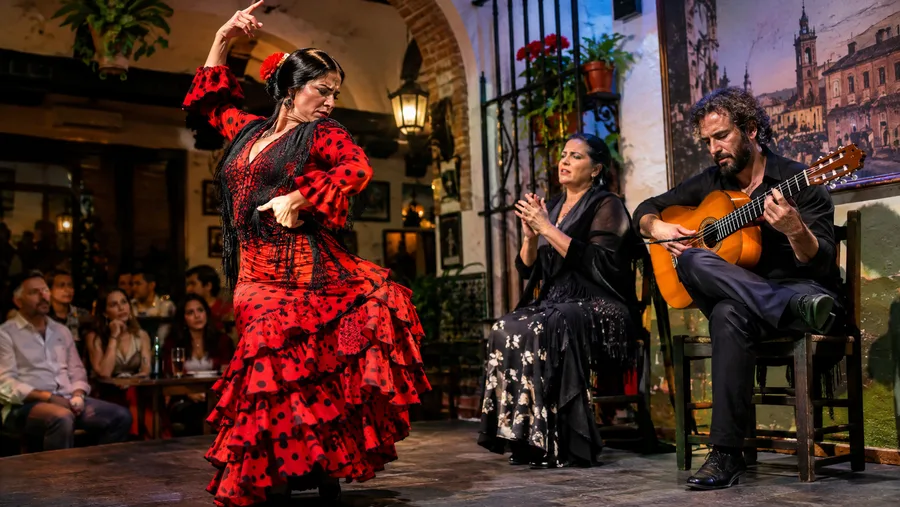
In a traditional flamenco show madrid, the hierarchy on stage is strict, even if it looks spontaneous. The cante - the singing - drives the entire performance. If the singer leans back, closes their eyes, and lets out a broken, gravelly cry from deep in the stomach, they are setting the tempo for pain, longing, or celebration. The guitarist listens with an intense, quiet focus, adjusting chord patterns on the fly. The dancer waits. When movement does happen, it is improvised communication. There are no prerecorded tracks, no click tracks, and often no amplification beyond the wooden boards beneath leather shoes.
The atmosphere inside these smaller venues makes your skin prickle. It is hot, crowded, and loud. You sit close enough to see the sweat fly off a dancer's temple and smell the rosin on the floorboards. That raw, volatile magic is what locals call duende. You cannot script it, and you certainly cannot package it with a microwave dinner.
Pro tip: Look for venues that list the names of individual guest artists rather than an anonymous house troupe. When a venue rotates its roster weekly, it means local aficionados are coming to see specific masters perform.
The Old Guard: Seeking the Oldest Flamenco Show in Madrid
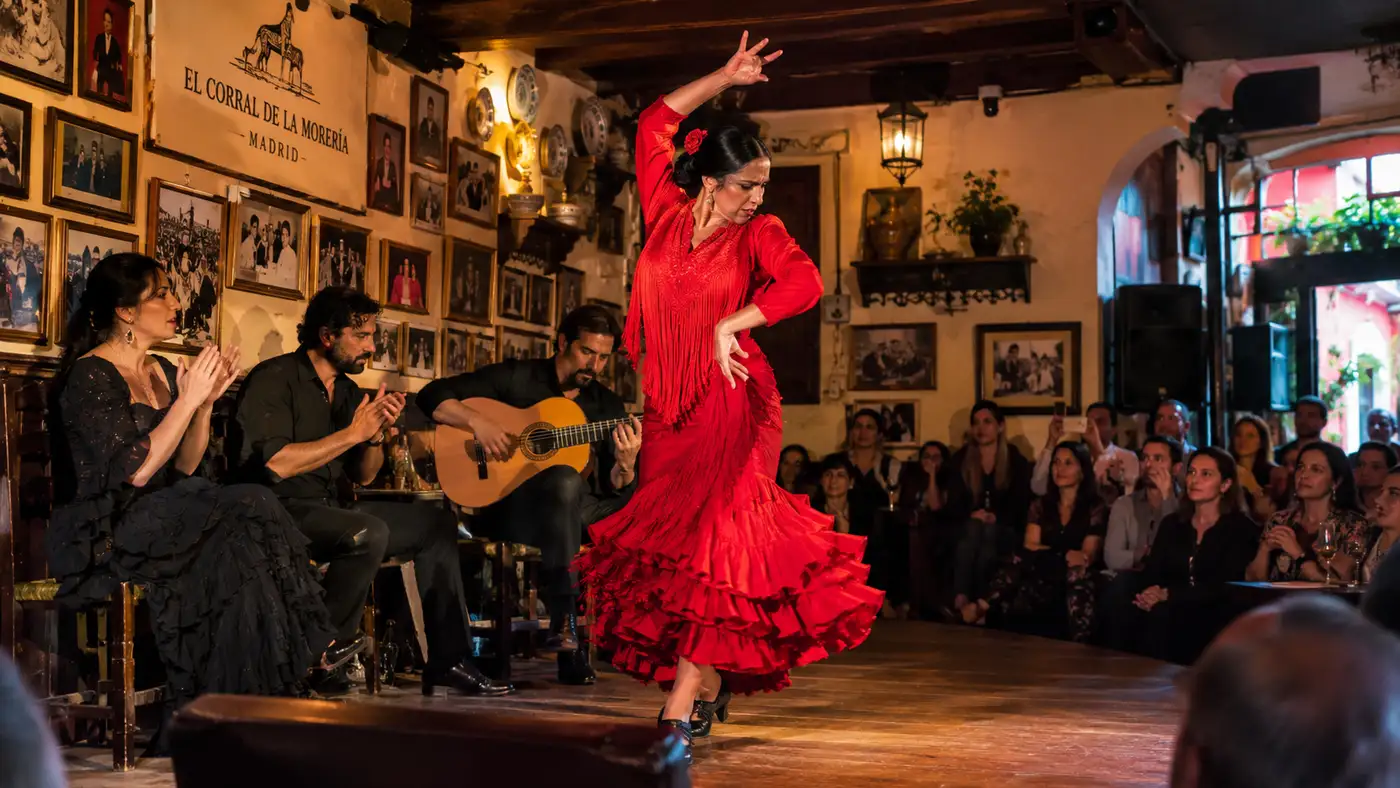
Corral de la Morería opened its doors in 1956 near the Royal Palace. It holds the undisputed title of the oldest flamenco show in madrid, and its walls are covered with black-and-white photographs of Ava Gardner, Salvador Dalí, and Frank Sinatra sitting at corner tables. Usually, when a venue becomes that famous, the soul rots out. Tourist buses pull up, the art gets watered down, and the kitchen takes over. Corral de la Morería somehow resisted that fate.
While the front half of the room is undeniably upscale, the stage booking remains world-class. The management spends serious money bringing in National Dance Award winners and veteran guitarists who rarely play small clubs anymore. You will pay around €55 just to walk through the door for the show alone, and dinner pushes the bill well past €100. It is not a secret dive, yet it retains immense respect among working musicians because the artistic standards are ruthless.
For something with a similar heritage but a slightly grittier edge, look into the spaces that inherited the mantle of Casa Patas. Casa Patas on Calle de Cañizares was the spiritual center of Madrid live flamenco show history for decades before closing during the pandemic. Its spirit migrated into neighborhood associations and independent stages run by former patrons who refused to let the Madrid tradition die. If you wander the streets of Lavapiés and the Barrio de las Letras, you can still trace that lineage in tiny rooms where the wood smells of thirty years of spilled Rioja.
Neighborhood Tabernas and Secret Peñas
If you want flamenco madrid non turistico, you have to leave the center of the tourist grid. Real aficionados do not hang out near Puerta del Sol. They go to peñas flamencas - private cultural clubs run by and for members - or to low-key neighborhood taverns where music breaks out because someone brought a guitar case through the door at midnight.
Peña Flamenca Chaquetón is an institution. Located well outside the tourist center, this is where older Spaniards gather on Friday nights to listen to pure, uncompromising cante jondo (deep song). There are no frilly costumes. An older man in a brown sweater sits on a simple chair and sings about mine disasters or prison cells for forty minutes straight. The room is pin-drop silent. If you whisper, someone will shush you immediately. It is an acquired taste, perhaps intimidating for a first-timer, but it is as pure as live flamenco madrid gets.
A more accessible middle ground lies in our favorite best flamenco bars and tabernas in Madrid, where wine flows freely and shows cost a fraction of the big theater tickets. Taberna El Cortijo in Vallecas is worth the twenty-minute metro ride on Line 1. It is run by Andalusian transplants, serves generous portions of fried fish, and hosts performances on tiny stages where local flamenco madrid families sit three feet from the performers. The vibe is loose, warm, and entirely unconcerned with tourist expectations.
Note: Peñas and neighborhood clubs operate on Spanish hours. If a poster says the music starts at 22:00, the musicians might still be having a beer at the bar at 22:45. Bring patience and do not make tight morning plans for the next day.
Book your flamenco show madrid experience:
Comparing Madrid's Most Authentic Flamenco Spaces
Every venue offers a different slice of the culture. Some emphasize jaw-dropping footwork in intimate rooms, while others focus purely on the poetry of the guitar and vocals. Choosing the right spot depends on how close to the raw bone you want your evening to be.
| Venue | Neighborhood | Average Entry | Atmosphere | Primary Draw |
|---|---|---|---|---|
| Las Carboneras | La Latina | €42 - €48 | Subterranean, focused | Improvised, contemporary dance |
| Cardamomo | Barrio de las Letras | €39 - €45 | Fast-paced, lively | High-caliber rotating guitarists |
| Taberna El Cortijo | Vallecas | €12 - €18 | Neighborhood diner, loud | Local community, zero pretense |
| Teatro Flamenco Madrid | Malasaña | €26 - €32 | Intimate theater seating | Excellent acoustics, clear views |
| Peña Chaquetón | Prosperidad | €15 - €20 | Serious, academic | Pure cante jondo for connoisseurs |
Las Carboneras deserves special mention. Tucked into an alleyway near Plaza Conde de Miranda, it was founded by dancers who wanted to escape the rigid choreography of mainstream productions. The stage is low. The seating is tight, holding maybe 70 people on wooden chairs. What happens on that stage is pure flamenco en vivo madrid: dynamic, unpredictable, and driven by mutual respect between the performers. You will often see other dancers sitting in the audience, watching their colleagues with keen, critical eyes.
How to Experience Live Flamenco Like a Local
Attending an authentic flamenco show madrid comes with its own unspoken social contract. It is not passive background entertainment. In a traditional setting, the audience is an active participant in creating the tension on stage, but doing that correctly requires restraint.
Here are basic rules of engagement for entering an authentic room:
- Do not clap along: Flamenco rhythms are labyrinthine, built on complex 12-beat cycles called compás that shift accent marks unpredictably. If you clap on what feels like the beat to your pop-trained ear, you will derail the musicians. Leave the palmas to the artists on stage.
- Learn when to shout jaleo: Encouraging cries like "¡Olé!" or "¡Eso es!" belong at moments of peak emotional tension, usually when a dancer finishes an intricate sequence or a singer hits a devastating falsetto run. Shouting it at random breaks the spell.
- Skip the bundled dinners: Most authentic venues offer tickets with a drink included (usually beer, wine, or a small glass of manzanilla sherry). Order the simple ticket. Eat proper tapas at a nearby bar before the show so you can devote your full attention to the performance without chewing over a guitar solo.
- Turn your phone screen off: Holding a bright rectangle up to record a three-minute video is universally hated by serious performers. It ruins the dark, cavernous atmosphere and signals to everyone in the room that you are consuming content rather than experiencing the moment.
If you want to dive deeper into the technical craft after watching a show, Madrid is also home to world-renowned academies. Spots like Amor de Dios on Calle de Santa Isabel have trained generations of legends; walking past their second-floor practice rooms during the day fills the street with a relentless, thundering rhythm of practice shoes that reminds you how much sweat underpins the beauty.
Another smart angle is checking the calendar for independent cultural halls. Centers like Off Latina often stage experimental, stripped-back flamenco vivo madrid productions that cost around €14 a ticket. These shows strip away the tourist polish entirely, putting raw talent in front of young, discerning Madrid theatergoers who demand emotional honesty over flashy tricks.
Frequently Asked Questions about authentic flamenco in madrid
Is Madrid better than Seville for authentic flamenco shows?
Andalusia has the ancestral lineage, but Madrid has the industry and talent density. The best artists from across Spain move to Madrid to make a living, which means the technical quality and competitive drive in Madrid venues often surpasses what you will find in southern tourist hubs.
How far in advance do I need to book?
For intimate venues like Las Carboneras or high-reputation spaces like Corral de la Morería, book at least five to seven days ahead, especially for weekend shows. Neighborhood peñas and smaller tabernas usually allow you to walk in or call ahead the morning of the show.
What time do the best non-touristy shows start?
Authentic sessions almost always happen late. While the first seating at commercial tablaos might begin at 18:30 for cruise ship crowds, the real energy peaks during the second or third sets, typically starting between 21:30 and 23:00.
Quick Reference
- Avoid shows bundling frozen paella dinners
- Ticket prices for genuine shows run €18 to €55
- Late seatings after 21:30 attract fewer tour groups
- Never clap along to the rhythm from the audience
- Small basement tablaos offer the rawest experience
Book your flamenco show madrid experience:
The Bottom Line
You can spend your time in Madrid being herded into velvet-roped caverns where bored performers run through the motions for people holding selfie sticks, or you can track down a dark, low-ceilinged room where a singer sweats through their collar while telling an old truth. Flamenco is not pretty, easy listening; it is fierce, occasionally harsh, and intensely personal. Make a reservation at a small stage, order a dry sherry, keep your phone in your pocket, and let the real sound of the city work on you.
Read more about flamenco show madrid.